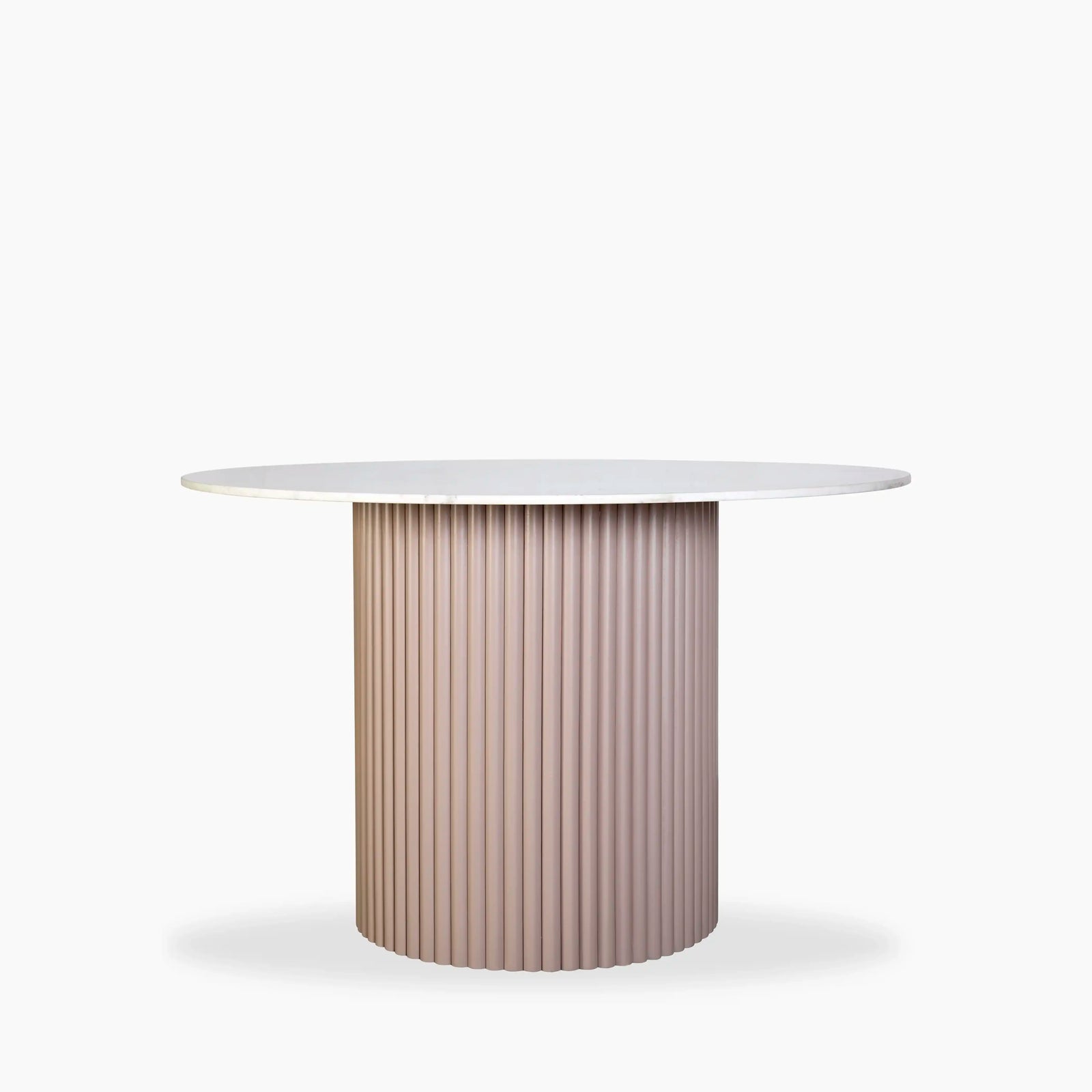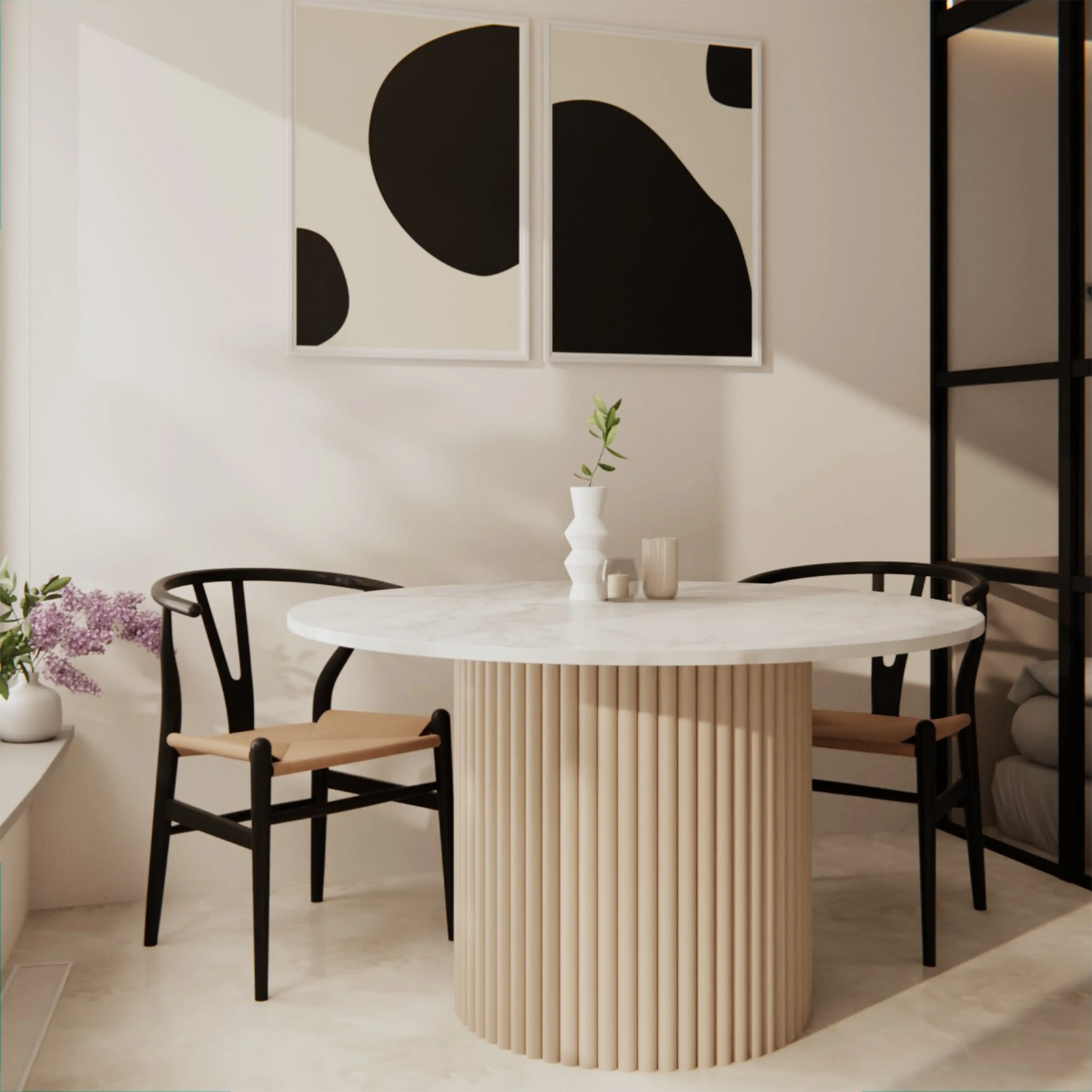




Carson 6 Seat Oval Dining Table
Maroon Red Marble & High Gloss Burgundy
CHF 1,115
Buying Guide
Everything you need to know about marble and marble furniture.
10 min read


Drama meets durability. Let's dive into the world of Marble.
Marble has a rich history linked to elegance and classic beauty. We explore museums and ancient buildings filled with statues, towering columns and ornate furniture, all made from marble stone. We know it is durable and a sign of wealth, but is there space for it in the 21st century?
In short, yes. There are refreshing and modern ways to incorporate marble into our homes. From how it's formed and what to look for, to how to style it and keep it looking stunning for years to come, every slab tells a geological story that has been millions of years in the making.
From calm, neutral whites and taupes to richly dramatic burgundies and jewel tones, marble spans the full spectrum of interior moods. Here's how to make the most of it.
What is Marble? · How it's made · Types of Marble · Benefits · What to look out for · Polished vs Honed · What is Marble Effect? · Styling Tips · Marble Care + Stains · Protection Tips · How Marble Is Delivered


From the Greek word meaning "shining stone", marble was once a symbol of wealth, status and architectural ambition; it's now as at home in a contemporary flat as it is in a Renaissance palazzo.
What makes marble so compelling is its combination of drama and durability. It's a robust, hard-wearing material with a naturally porous surface, which makes it ideal for high-traffic areas like hallways and dining rooms.
But here's a lesser-known fact: marble develops over time. It builds what's called a patina - a subtle change in surface character that, far from being a flaw, adds depth and story to the stone. Think of it less as wear and more as personality.
Discover more about patina below.
How is Marble Made?
We’re heading back to geography class - and the term "metamorphism." Ringing a bell? Metamorphism is the process by which different types of rock (usually limestone or dolomite) are transformed through extreme heat and pressure deep within the earth. This is how marble is formed.
During this process, impurities within the original rock - clay, silt, sand, iron oxides, and other minerals - get locked into the stone as it recrystallises. These impurities are what create marble's signature veining and colour variation.
Every swirl, streak and cloud in a marble slab is a record of what was present in the earth at that exact moment. The process is entirely impossible to manufacture or control, which is precisely what makes marble authentic, and why no two pieces will ever be the same.
Types of Marble
Marble slabs can vary massively from one slab to the next - but it’s worth noting that there are recognisable families, which can be defined by colour, veining, origin, and character. Some marbles convey calm and serenity, others are dramatic and bold.

Sourced from Spain, Emperador is for those who want something richer and more dramatic. A deep chocolate-brown base with pale cream and gold veining, it's opulent, warm, and surprisingly versatile. It lends itself to maximalist and retro-inspired interiors. When used in a single statement piece, it grounds and warms even the most restrained space and gives a dramatic focal point.

Quarried in India, Toronto marble (also known as Toronto Brown) is defined by a brownish-grey background with intricate swirling veins of brown, cream, and occasional hints of green. It’s often lighter with more subtle veining and clouds than Emperador marble. Its warm neutral tone means it works across a wider range of interior styles than you might expect, from earthy, organic spaces to contemporary interiors with a material-led approach.

Sourced from the Udaipur region of Rajasthan in India, this marble comes in several distinctive varieties. Udaipur Green is perhaps the most striking, and the go-to hue. A deep emerald base interlaced with bold white and lighter green veins, ranging from light mint to rich forest green. Udaipur Pink is warmer and more romantic, with a blush-pink base threaded with grey and white swirls.

Probably the most recognisable name when it comes to marble. Quarried from the mountains of Carrara in Tuscany, Italy, this is the marble Michelangelo used for his sculptures. Characterised by a soft white or blue-grey background with delicate, wispy grey veining, Carrara is understated and endlessly elegant. It sits beautifully in minimalist and Scandinavian interiors, where its quiet presence adds luxe without noise.

Exclusively mined in the Apuanian Alps of northern Italy, Calacatta is Carrara's more dramatic sibling. Where Carrara is soft and subtle, Calacatta has a pristine white background with thick, vivid veining in shades of gold, grey, and warm brown. The quality of Calacatta can vary significantly: prominent, defined veining indicates a higher grade, while a hazy or unclear pattern suggests something lesser.

Sometimes called "travertine marble", this stone is more like a close cousin. It shares marble's warmth and general texture, but the surface often features pinholes and a more linear, layered patterning. The tone is typically warmer and earthier than marble - ivory, walnut, and warm beige are common. A beautiful material in its own right, and well worth knowing the difference.
The Benefits of Marble Furniture
The Benefits of Marble Furniture
The Benefits of Marble Furniture
The Benefits of Marble Furniture

The veining, the colour, the intensity of the pattern - all of it is determined by the specific conditions of the quarry and the geological processes that formed it. What you end up with is a piece of furniture that is, quite literally, one of a kind.
SHOP MARBLE FURNITURE
Why choose marble?
The main characteristics of marble...

The distinctive veining and natural patterns of marble are impossible to replicate artificially.

Robust and hardwearing, marble is made to withstand decades of wear. Just look at the structures and statues in museums.

The colour and veining of marble differ from slab to slab, meaning you end up with a piece of furniture completely unique to you.

A natural property of marble that makes it particularly pleasant in warmer months.


Not all marble is created equal. Here's how to tell the good from the great:
Where the marble comes from matters. Italy (Carrara, Calacatta), Spain (Emperador), and India (Toronto, Udaipur) are all renowned for high-quality stone. Origin doesn't guarantee quality on its own, but it's a useful starting point, and a good supplier will always be transparent about provenance.
Fissures - small, naturally occurring marks beneath the surface - are completely normal in marble and should be seen as part of its character. However, crumbling and cracks (easily felt with your hand) are signs of poor-quality marble. A general rule: if you can't fit your nail into it, it shouldn't cause any structural issues.
The intensity and evenness of colour are indicators of quality. Cloudy, faded, or inconsistent patches suggest a lower-grade stone. High-quality marble has an evenness to its base colour, even when the veining itself is dramatic. And don't default to white without considering other shades - burgundy, green, brown, and black marble can be just as stunning and often hide everyday marks far better.
Balanced, defined veining generally indicates better quality. Veining that's very thick, irregular, or unclear can point to a lower grade. Italian marble tends to have finer, more refined veins compared to some Indian varieties, which lean towards bolder, more abstract patterning. Ultimately, every slab is unique, so trust your eye.


This is largely a lifestyle and aesthetic choice, but it's worth understanding the difference.
Polished marble has a sleek, reflective surface that adds a luxe, high-glamour appeal to spaces. It intensifies the colour, brings the veining to life, and reflects light.
Honed marble has a matte, satin finish. It's softer-looking, more understated, and a great choice for those who like a more subtle, organic look. The matte surface also means there’s slip resistance.
For a subtle matte finish, go for a honed marble look - the Akira Coffee Table has the beautiful veining of emperador marble but with that elevated matte surface.


Love the look of marble but not quite ready to commit to the real thing?
Marble effect furniture is a brilliant alternative - and it's come a long way. With advances in printing and finishing techniques, today's marble effect pieces capture the veining, depth and tonal variation of natural stone with impressive accuracy, at a fraction of the cost.
It's also considerably more forgiving. For busy households, families, or anyone who wants high-impact style without the upkeep, marble effect is the smart, confident choice.


Marble is somewhat trendless, and marble furniture can inject luxe appeal without looking dated.
It supports minimalist-style rooms by effortlessly adding depth and luxurious appeal, and dramatic styles emphasise Maximalist decor effortlessly. Each piece of marble has a personality.
Whilst it is still an investment piece to be cherished for years to come, hints of marble, whether that is dining table tops or table lamps, offer more flexibility than opting for larger marble slabs. Choosing wisely by aligning with your design goals and elevating your style…


Used in minimalist settings, marble does the heavy lifting. One piece, such as a dining table, coffee table, or side table, can become the focal point around which the whole room orbits.
Choose pieces with clean lines and smooth curves so the marble itself does the talking, rather than the shape. Neutral colour palettes work brilliantly here: classic white marble, or neutrals such as light browns with hints of blue, work wonders to lift a room that gives more “flat” than “fab”.


Eclectic interiors call for bold marble choices. Go for stones with dramatic veining - deep black with white, rich brown with gold or deep greens that live for drama. Contrasting colours and materials add a sense of the unexpected for the maximalists. We’re thinking green marble with warm rust-orange upholstery. Deep Emperador brown alongside rust red velvet. This is not the moment for restraint.


Marble is a natural fit for Scandinavian spaces - its cool, natural origins feel right at home among linens, light woods, and boucle. A marble side table or lamp base introduces a luxe note without disrupting the calm. Keep the palette neutral and let the texture do the work. Travertine works beautifully in these settings too, for a warmer, earthier alternative.


Alongside mixing materials and bold colours, there is a sense of marble modernising beyond its classic stereotype of statues and flooring. Hints of marble in accessories - lamp bases, decorative objects, small side tables - are a cost-effective and flexible way to introduce the material. These smaller pieces let you live with marble before making a larger investment, and often have just as much visual impact.
One of the biggest marble trends right now - and one that looks set to stay - is mixing marble with other materials for a layered, high-design effect...
Marble + Mixing Materials

The juxtaposition of a marble surface with a high gloss base or frame creates visual tension that feels genuinely luxurious. Our range of high gloss and marble combinations does exactly this.

The warmth of walnut-stained and honey-hued woods with cool marble works every time. We love our Bond Range, which has intricate veining in creams, browns, and blues mixed with dark wood.

Chrome, brass, and blackened steel all pair brilliantly with marble. Chrome adds a contemporary edge; brass brings warmth and richness; blackened steel creates industrial drama.

A marble dining table surrounded by boucle or velvet chairs is a study in contrast. Hard and soft, cool and warm, natural and tactile. It works every time.
How to Clean Marble Furniture
Marble is porous, which means it requires a little more attention than tougher, non-porous materials. But with the right approach, it's genuinely low-maintenance day-to-day.
Acidic substances - wine, coffee, citrus juice, tomato - are marble's worst enemy. Here's what to do when the inevitable happens:
Water marks can often be removed if caught quickly - use a dry cloth to draw the moisture out as fast as possible. Left to dry on their own, water stains can become permanent. Speed is everything.
Over time, marble will naturally develop a patina. This is a subtle change in surface character caused by everyday use and light exposure. It is not damaged. It is the marble settling into its life with you, developing a depth and warmth that a brand-new slab simply doesn't have.
It's an extremely gradual process, and in many cases you'll barely notice it happening. Consider it part of the furniture's story - not a flaw, but a feature.
How to Protect Marble Furniture
Prevention, as always, is the best protection. A few simple habits will keep marble looking exceptional for years:
This is one of the most common questions we get.
Marble slabs will occasionally have what is called “fissures”. These marks are part of the marble and play a part in the quality and unique nature of the stone.
Fissures are formed during the stone’s creation deep within the earth. They're not a defect. In contrast, a crack is often more noticeable and present on the surface of the marble; they are often straight and can deepen or grow over time. You may also notice it grows over time.
A general rule of thumb is if you can’t fit your fingernail in the gap, it’s likely a fissure.
Marble at Cult
All of our large marble furniture is a 2-person delivery service to a room of your choosing. For the Toulouse and Naxos Ranges, this is a 3-person service that will also unpack your order for you. For all in-stock marble furniture, it will be delivered within 3-5 working days unless stated otherwise. For example, public holidays may delay its arrival.
All of our marble furniture is carefully packed and padded to avoid damage during transit.
You are advised to clear the route and area of obstacles, and recommended to cover the floor for protection to avoid any scratches from such heavy items.
Marble is an investment - in quality, in beauty, and in a material that only gets more interesting over time. Approach it with a little care, and it'll reward you for years. Approach it boldly, and it'll transform a room entirely. Either way, you're in good company.
Shop Our Marble Collection
Maroon Red Marble & High Gloss Burgundy
Emerald Green Marble & High Gloss Mint Green
French Riviera Marble & Walnut
Maroon Red Marble & High Gloss Burgundy
French Riviera Marble
Maroon Red Marble & High Gloss Burgundy
Maroon Red Marble & High Gloss Burgundy
Emerald Green Marble
Maroon Red Marble & High Gloss Burgundy
Fantasy White Marble & High Gloss Clay Green
White Marble & Taupe
Buying Guide


10 min read
With its neutral and warm palette, one-of-a-kind surface, and durability, travertine stone has transitioned from flooring and cladding into dining tables, living room tables, and lamp bases.
Read Article
Buying Guide


10 min read
Who doesn’t love the allure of velvet? For rich depth of colour and luxurious quality, velvet fabric is a tactile and soft material that is also highly durable, with velvet furniture being suitable for everyday use in any space.
Read Article
Buying Guide


10 min read
Offering tactile comfort, subtle elegance, and a quality finish, boucle balances comfort, durability, and visual intrigue. Its looped texture adds instant depth and warmth to any space.
Read Article
Buying Guide


10 min read
High gloss has cemented itself as one of the defining aesthetics of 2026, but don't mistake it for a flash-in-the-pan trend - it has staying power. A coveted aesthetic across interior styles in bedrooms, living spaces, and dining rooms, here is everything you need to know about high gloss furniture.
Read Article

1000s of products in stock for quick delivery

Shop guilt-free with our Eco Edit range

Our London Showroom is bursting with inspiration

Hassle-free returns and exchanges
Your bag is currently empty.
Join the Cult, having an account gives you access to:
Please select your shipping location to continue to our online store.
Save your Wishlist by logging in or creating an account. Share it easily after logging in.
Select list
Get in touch with our team directly for all your trade related enquiries.