






Connick 3 Seater Sofa
Caramel Brown Sustainable Mohair Velvet
CHF 925
Trends
The Rise of 1970s Interior Design and how to incorporate 70s Design.
10 min read


A vibrant blend of nostalgia and innovation, 1970s interior design spans from the disco era of Studio 54 to the retro charm of Mid-Century Modern. It can incorporate elements of bohemian freedom from the 1960s as well as radical design from space-age futurism. It feels as exciting and relevant as it did fifty years ago. Let’s take a look at 70s Revival.
A Brief History · Hallmarks · How to Style 70s Revival · 70s Fabrics + Decor · 70s Colour Palette · Small vs Big Spaces · Designs To Avoid


A Brief History
The cultural relevance of 1970s design continues to shape our homes. It represents individuality and self-expression - a clear contrast to the minimalist “Millennial Grey” that has dominated the last decade. 1970s decor was brimming with artistic vision that took the rigid rules of the previous decades and transformed them into an expressionist style.


The seeds were planted in the late 60s Radical Design Movement, led by Italian innovators who rejected the suburban ideals of the 1950s. Their playful furniture and interiors were both art and subtle protest in a post-war world - these designers were pushing the boundaries.
As more people moved to cities, living spaces became smaller and informal, and 70s furniture needed to evolve to suit their vibrant lives. Designers answered with furniture that was bold, functional, and comfortable - perfect for a generation eager to make a statement.


New man-made materials such as plastic and polyurethane revolutionised interiors. Affordable and easy to shape, plastic could be moulded into organic curves and saturated colours that felt thrillingly futuristic.
Metals and smoked glass added to the futuristic vibe with a space-age gleam reflecting a society captivated by the moon landing, glam rock idols such as David Bowie and sci-fi culture. Think tubular chrome lounge chairs and tonal glass tables - high-shine pieces that looked straight out of tomorrow.


Not everyone craved the seventies space capsule. The 1970s epitomised laid-back lived-in style, and a softer, earthier palette was sought-after - supple leathers, sunset-hued velvets, and natural materials such as bamboo and rattan were popular. Whilst dark woods gave depth and richness, they complemented decorative wallpapers. 1970s interior design was stripping back the over-the-top, outdated decadence of the Art Deco period for fun-filled functionality.
Laid-back lounging was introduced in the form of modular sofas that encouraged flexible, conversation-friendly layouts, while the warm browns, oranges, and greens created a lived-in comfort that still feels inviting today.
Injecting fun into furniture/interiors offered more freedom in design choices. Comfortable lived-in set-ups that mixed colours, shapes and materials became the norm. No wonder we’re experiencing a 70s Revival…


Hallmarks of 70s Revival
With comfort and functionality at its core, the 70s Revival today takes the key elements of this retro style and refines for a more curated approach.
The 70s colour palette is brimming with mossy greens, rich browns, rusts, and ochres that combine seamlessly with tan hues and dark woods.
Chrome, brass, smoked glass, and sculptural plastics, futurism gave modern 70s decor a risque edge.
Curved sofas, kidney-bean coffee tables, and rounded corners, 1970s furniture created movement and softness in spaces.
Low, lounge-style seating, including bulbous low-back sofas and slouchy lounge chairs with rounded, curved designs.
Juxtapose sleek metals with plush boucle or velvet. The seventies mastered the art of clashing - mixing patterns as well as fabrics was celebrated.
How to use 70s furniture
70s Revival into home interiors

Deep reds are making a comeback, and in high gloss finishes, they pack a punch. Teamed with tubular metal frames and round coffee tables in chrome or brass.

A staple from the 70s, dark-toned wall panelling adds instant warmth and texture, especially in your aspirational 1970s living room.

Within classic pieces, such as sideboards or dining tables, to give a hint of retro style without being overpowering.

Say goodbye to the simple lines and explore creativity with curves, arches, and waves. Think wavy mirrors and globe lighting, plump cloud-like sofas and unusually-shaped coffee tables.

Experimenting with materials screams seventies, whether it’s soft boucle and cool metal or rattan lighting and rich, luxurious velvet.

Terracotta and ochre hues give 70s Revival and versatility - a spectrum of browns from tans and taupes to dark mocha will make a 70s statement.
This iconic design was very much pre-70s but has elements of 70s design and a retro feel. The rattan detailing brings big 1970s vibes, but you can modernise this look with upholstered seating in velvet and boucle. Considered high shine frames in chrome and brass. See below for our inspo. For Cult-inspired cantilever, check out our Kenton Range.
Sofas with low backs and soft fabrics give a conversational, relaxed vibe, whilst modular sofas offer versatile customisation. 70s-inspired sofa styles are rounded and curved, upholstered in soft fabrics such as boucles and velvets.
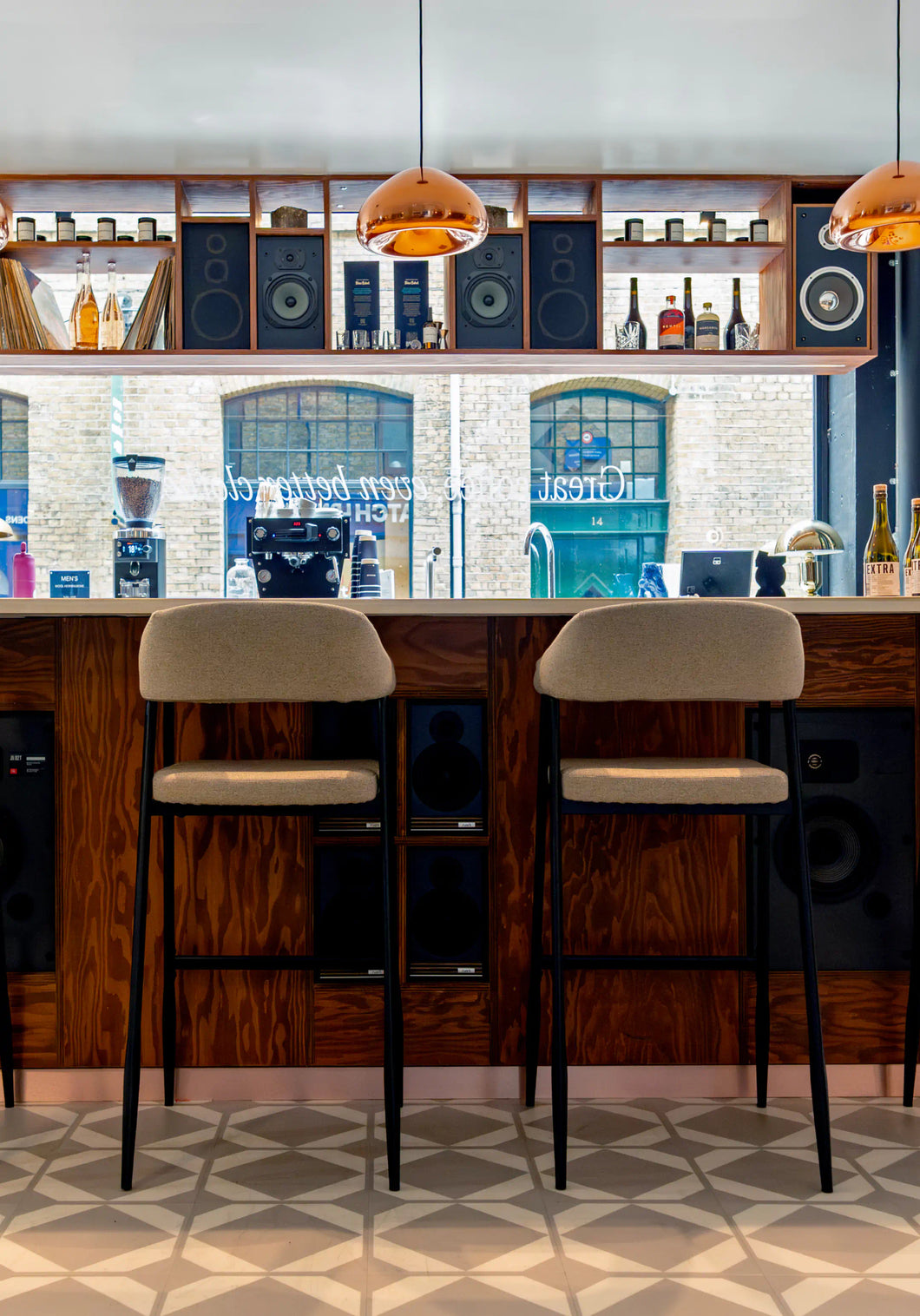
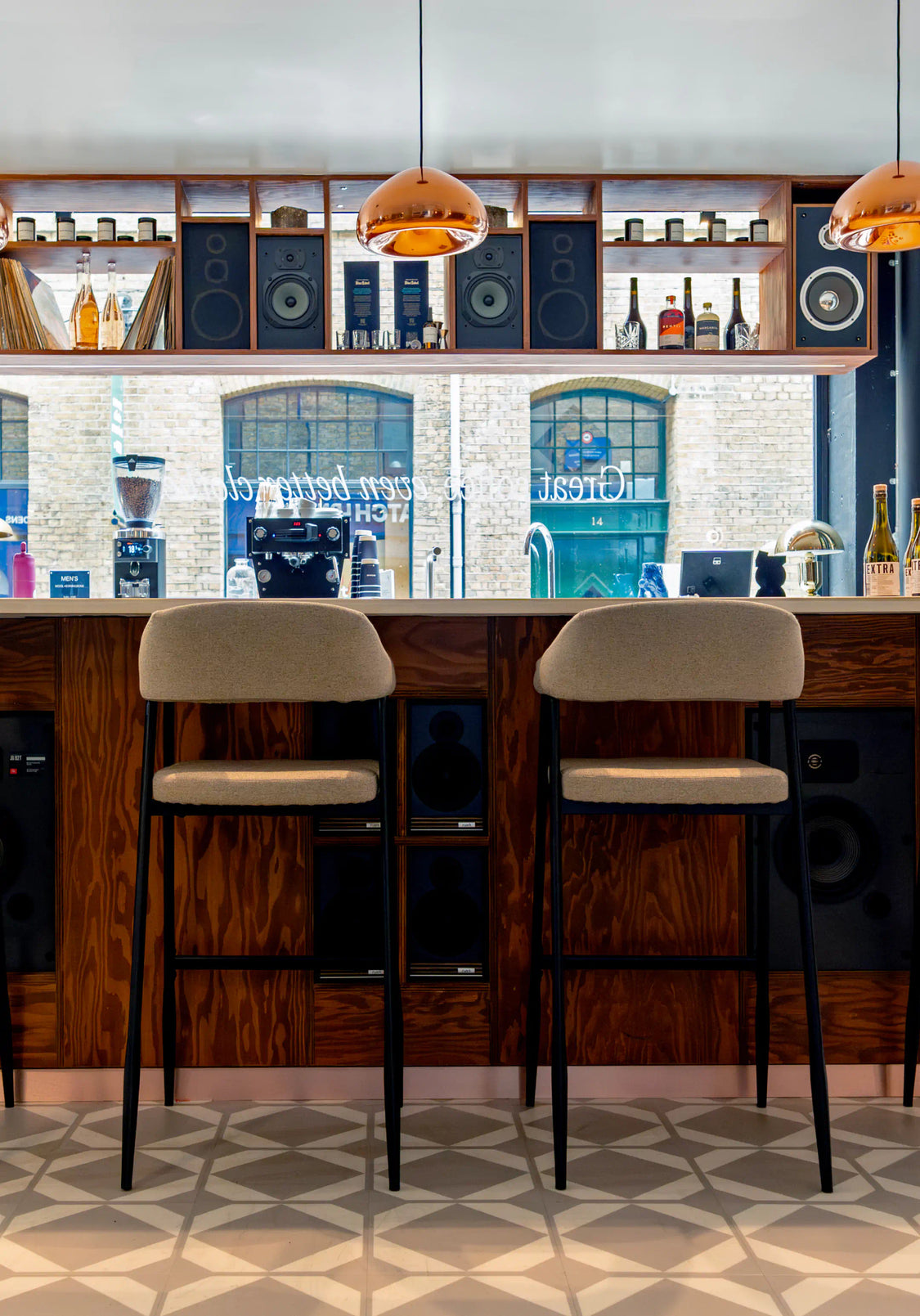
Mid-Century chairs and stools blend seamlessly with 70s Revival. Metal frames and low bolster cushions give cool functionality whilst velvet seating, natural cane backs and walnut-stained wood frames embrace classic 70s style.
From slouchy Mad Men-esque styles in leather to elevated velvet swivel chairs, investing in 70s Revival Accent Chair gives that wow factor.
A new twist to 70s Revival. Terrazzo was a popular choice 50 years ago, but it can look somewhat dated today. Step forward travertine - in neutral creams and browns, it aligns perfectly with the 70s trend.
You can find out more about Travertine in our Buying Guide.


Velvet was a way to bring luxury into the home, but whilst the Art Deco period featured crushed velvet and decadent styles, the 70s stripped this back. Hues such as moss green, burnt orange, and dusky pink add instant 70s style to a space.
The 70s introduced texture with tactile materials such as macramé. Elevated this further with boucles. Avoid the teddy boucles and opt for more textural fabrics that incorporate multiple shades.
Combine with dark wood to give effortless 70s retro style or accessorise with lighting and vintage room separators.
Mushroom-style table and floor lamps, wavy stems, and pops of colour add 70s character. Whilst dynamic bamboo or rattan light shades are an easy win.
For the finishing touches, bring nature inside with exotic palms, ferns, monstreras, and yucca plants. Green, leafy and bold.
A quick and easy way to revamp spaces - opt for wall art prints in warm, earthy tones.


The 70s Aesthetic
Mid-century warmth still sets the tone, but today’s 70s Nostalgia favours slightly muted or expanded shades. Here are some top tips:


The 70s Aesthetic
Geometric and psychedelic swirls defined the decade, especially with wallpaper, but the modern update is a considered approach to textures and pattern combinations. 70s Revival still embraces the blend between nature and innovation, but for elevated design, and we have some top tips to incorporate 70s home decor:


70s style furniture can be over-the-top with large bulbous styles in deep colours, ideal for large spaces. To incorporate 70s decor for small spaces, consider thoughtful accents.
Updating walls with prints and wall panelling can celebrate this nostalgic style subtly, and give the illusion of more space, especially in 70s living rooms.
Lighting is also an easy update - statement bamboo and rattan lampshades add instant sculptural character. This is particularly true for 70s bedroom decor. For table and floor lamps, domed shades, brass finishes, and bright oranges are easily incorporated into any 70s-inspired living room or bedroom.


For big rooms, you can afford to go dramatic. Deep moss green velvet pieces, such as large 3-seater sofas placed in open-plan living spaces, draw in the viewer’s eye and bring softness to retro living rooms. For the ultimate seventies sofa, consider low backs that can be placed thoughtfully in the middle of rooms to create different zones, and a more laid-back conversational feel. For modern 70s home decor, fabrics such as boucle and velvet add to this lived-in vibe.
Large dining spaces - perfect for entertaining - call for walnut-stained dining tables. Large rectangular styles teamed with velvet or boucle dining chairs add retro vibes instantly. Dining chairs in both neutral tactile boucle or rich velvets complete the 70s look. And switching back to a smaller space, you can opt for a walnut dining table too! Just consider round options that give the illusion of more space.
Impractical and notoriously difficult to clean, they’re good for a week before looking tattered and dated. And in light colours, spills and marks are more apparent.
In particular, psychedelic designs and overcomplicated styles lead to a space looking clustered and vintage in all the wrong ways.
Rich earthy palettes are key with 70s decor; however, entire rooms of burnt orange, dark green and walnut-stained woods are overpowering and gloomy.
An obvious safety hazard, this traditional sunken pit design doesn’t translate into modern living.
Revolutionary back in the day, plastic is now often cheaply made and can look very outdated if overused.
Top Tip: Keep accessorising to a minimum - with colour and texture, overusing 70s home decor can make the place look clustered and dated.
Shop 70s Revival
Caramel Brown Sustainable Mohair Velvet
Moss Green Sustainable Mohair Velvet & Walnut
Smoked Walnut
+ 2 more
Natural Travertine
Natural Travertine Effect
Multicolour Orbis Patterned Fabric & Walnut
Soft Barley Sustainable Mohair Velvet & Walnut
Caramel Brown Sustainable Mohair Velvet & Chrome
Trends


10 min read
Clean, minimal, and pared back: Scandic interior design is the art of visual calm, layering texture, ambient lighting, and harmonious materials to create a home that feels cosy and stylish.
Read Article
Trends


10 min read
Mid-Century Design is effortlessly cool - a “form follows function” philosophy with Bauhaus, Danish, and traditional influences that still ring true today.
Read Article
Trends


10 min read
High gloss doesn't do wallflower. From choosing the right hue for your space to styling tips and ideas for every room in the home, we've got everything you need to make high gloss work for you.
Read Article

1000s of products in stock for quick delivery

Shop guilt-free with our Eco Edit range

Our London Showroom is bursting with inspiration

Hassle-free returns and exchanges
Your bag is currently empty.
Join the Cult, having an account gives you access to:
Please select your shipping location to continue to our online store.
Save your Wishlist by logging in or creating an account. Share it easily after logging in.
Select list
Get in touch with our team directly for all your trade related enquiries.


