






Get Inspired


5 min read
Curved Furniture - Why Soft Shapes Are Taking Over in 2026
Hard-edged minimalism and geometric lines are out. Generous forms and curved shapes are in. Here’s why soft furniture is taking over.
Read Article
Get Inspired
3 min read


Mixing woods breathes new life into tired spaces, from the Scandi‑inspired to the retro havens.
You inherit a table here. You fall for a sideboard there. You make a call on a coffee table that seemed right at the time because who knows what shade your flooring is anyway. Sound familiar?
Here's the thing: matching wood tones is pretty much impossible, and mixing woods - well, that is MUCH more exciting. A room built from a single wood species throughout can feel flat, so here’s how to mix wood tones AND get it right.
How To Mix Wood Tones Like A Pro
How To Mix Wood Tones Like A Pro
How To Mix Wood Tones Like A Pro
How To Mix Wood Tones Like A Pro

A considered blend of shades, grains, and finishes gives a space depth, character, and that collected-over-time quality money can't quite buy. Mixing woods is a conscious design decision that’s simple to achieve.
SHOP WOODEN FURNITURE


The undertone is the spectrum from warm to cool. Warm - think yellow, orange, amber, honey tones. Cool - you’re looking at grey, green ash, and a spectrum of blues. Right in the middle? This is neutral…but that’s the rare one that plays nicely with almost everything.
The easiest route to a mix that feels intentional? Keep the undertones in the same family. That means you can mix warm walnut stains with honey oaks. Take warm dark wood flooring - this will suit a honey-hued oak table with ease. Those same floors against an ash-grey shelving unit? Needs a bit more work. Match the feeling first. The colours can figure themselves out.


Consider creating an outfit. You have the dominant feature - aka the clothes (60) - then the accessories, jewellery (30), and even hairstyle (10) surround it.
Think of wood tones the way you'd build an outfit. One dominant tone does the heavy lifting - usually your biggest surface. Flooring, a large dining table, statement cabinetry. That's your 60%.
A secondary tone comes in across mid-scale pieces: a sideboard, a bed frame, TV Unit. That's your 30%. The last 10% is the accent - a lamp base, a tray, a picture frame.
This rhythm gives the eye somewhere to land and somewhere to travel.


Get The Look

Mikateko Graphic Print


To be deliberate, you have to be bold. Subtly and second thoughts read as accidental. This is the biggest mistake when mixing wood tones.
So what’s the fix? You widen the gap.
A mid-tone walnut TV Unit alongside a slightly darker walnut coffee table - the two walnuts are too similar. Switch up the coffee table for a warm burl wood, and you have unmistakable intention. Widen the difference, and suddenly it's a design decision. Narrow it, and it looks like a near-miss.
WOOD CONTRAST TAKEAWAYS


Mixing Woods By Interior Style
Mixing Woods By Interior Style
Mixing Woods By Interior Style
Mixing Woods By Interior Style

And it pays off every time. The rooms worth remembering are never the ones where everything agrees...


Scandi has always understood wood intuitively. Airy woods are a classic Nordic move - birch, ash, bleached oak - but the more interesting edit for 2026 introduces darker contrast: a walnut coffee table against light oak floors, a smoked oak sideboard alongside natural linen and rattan. Just remember to keep it cozy and grounded. Scandi can be mistaken for paleness - hygge is all about warmth. Mixing woods and Scandinavian design is actually a match made in heaven.


Mixing wood tones has an air of retro about it - this isn’t exactly your style. Less is more in your design world, but we’ve got your back. That pared-back sense of style is your primary design principle, and this still applies when mixing wood tones. For light oak floors, pair with a deep walnut statement piece - a dining table, a console - this works as visual punctuation.


Mid-century was built on warm, rich wood. The 70s Revival is all about walnut finishes, rosewood tones, and amber-hued pieces. When incorporating mixed woods within retro-inspired interiors, there is so much opportunity. The one rule? Keep everything within the same warmth family but vary the depth. A smoked walnut-stained sideboard alongside a light walnut table - both warm, both distinct. Pair with boucle, velvet in earthy tones, and brushed brass hardware. The good stuff.


Here the rules become suggestions. Take a vintage-adjacent piece and place next to something clean and contemporary. The key in a maximalist scheme isn't restraint - it's rhythm. Repeat each tone at least twice across the room so the eye reads pattern, not chaos. Dark walnut table - echoed in a dark walnut panelling on the wall opposite. Pale oak shelf - mirrored in a pale oak tray on the coffee table. Scatter it. Let it breathe. And finish off with some dramatic burl wood to tie the whole room together.


When two tones are pulling in slightly different directions, a bridge piece resolves the tension without replacing anything. A patterned rug that pulls threads of both shades. A piece of art. A decorative bowl or lamp base that happens to contain both tones. These are the unsung heroes of a mixed-wood scheme - the things that make it look like you planned it all along. (You did. Obviously.)


One of the most effective tools in a mixed-wood room? Mixing other materials as well. Stone, metal, and glass all act as visual resets - they give the eye a breather and tie the whole room together.
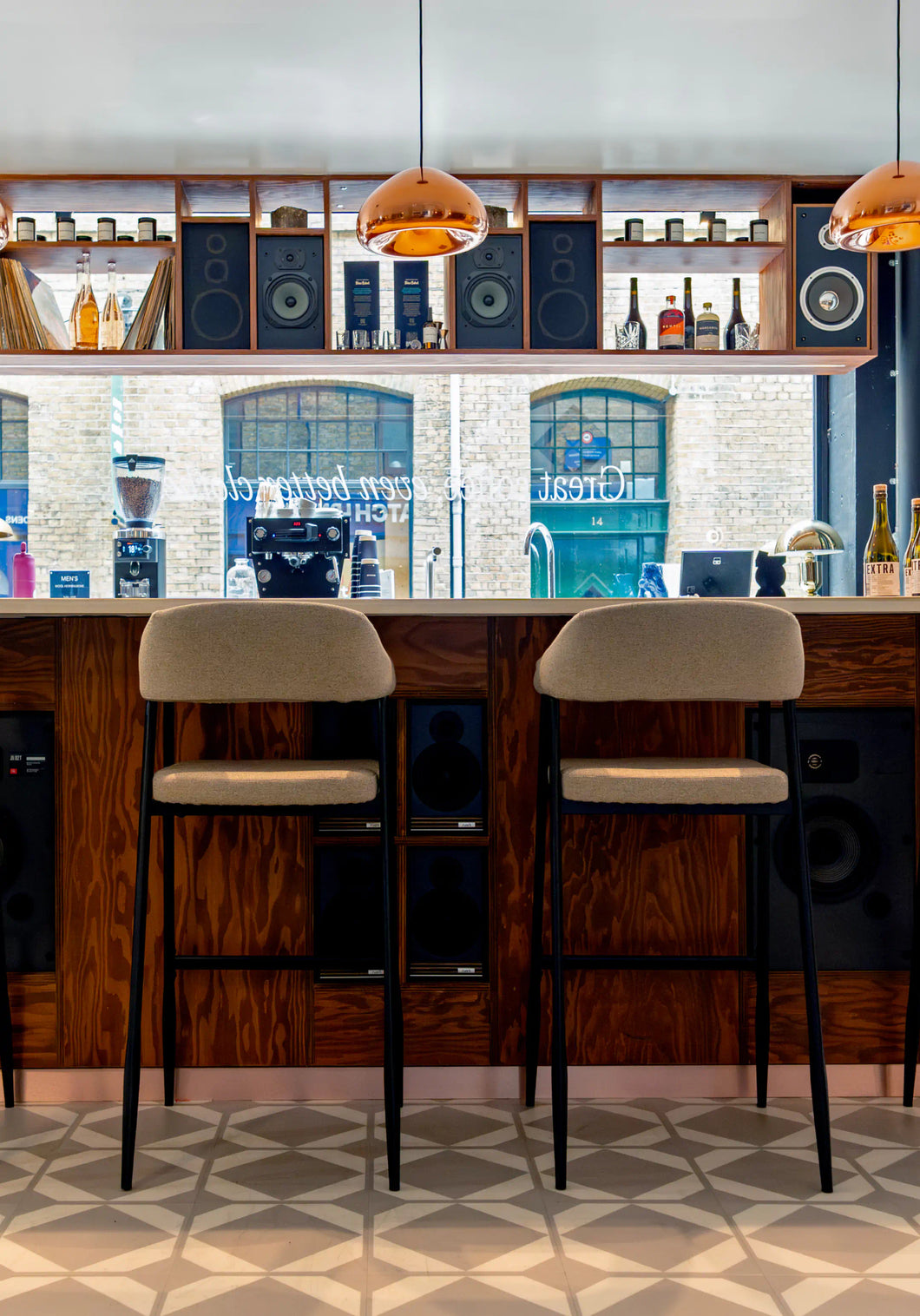
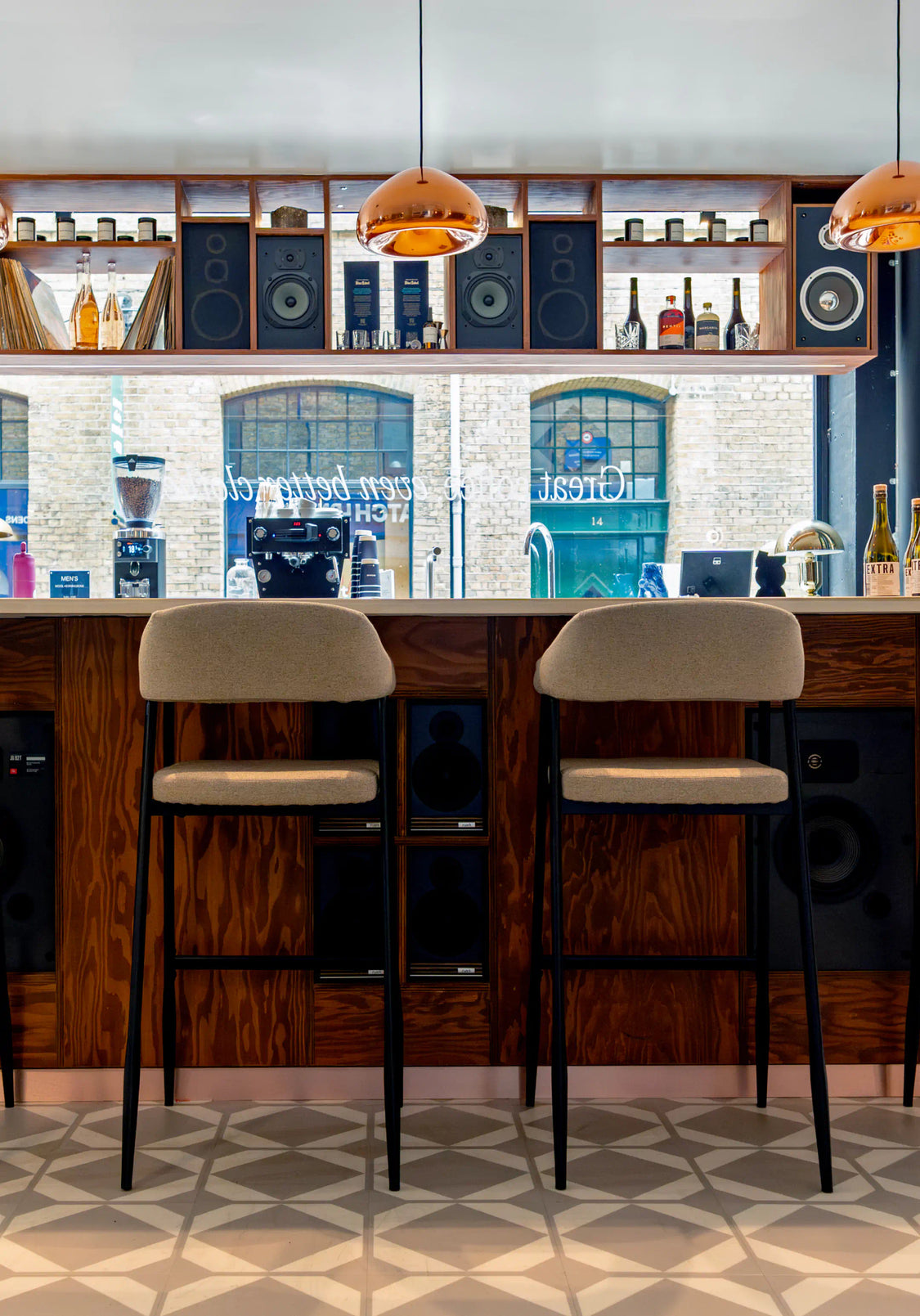
A coffee table with a walnut wood base but a marble top, complementing a smoked walnut TV unit, all against warm oak wooden flooring. And keeping it cool? The brushed chrome handles on a wood-toned cabinet with a speckled stone sofa that neutralises the space between two competing shades.
Get Inspired
5 min read
Hard-edged minimalism and geometric lines are out. Generous forms and curved shapes are in. Here’s why soft furniture is taking over.
Read Article
Behind The Scenes


10 min read
Inspired by the glamour of the 70s Riviera, old-school Ibiza, and the golden era of retro resort culture, this is Cult's most immersive campaign yet. The doors are open. Step inside.
Read Article
Trends


10 min read
Mixing materials is the design move that turns a good room into a great one. Here's how to do it with confidence - from anchoring your space to layering textures like a pro.
Read Article
Get Inspired


10 min read
This isn’t the polished Instagramable version of the Amalfi Coast, or the bright white sands of the Maldives. This is the Great British Seaside - no passport required.
Read Article
Get Inspired


10 min read
UPDATED: 9th June 2026. Defined by contrast, rich in character, and with a renewed focus on homes that are actually lived in, interior trends in 2026 are bold yet considered.
Read Article
Get Inspired


10 min read
A reading nook is your personal cosy corner, purpose-built for escaping into a story. This guide covers all manner of reading corner inspo to suit every style, space, and budget.
Read Article
Get Inspired


5 min read
Creating the perfect space at Grand House Live 2025 from concept to reality - discover how Ayisha transforms her dream into a reality, using Cult Furniture.
Read Article
Cult Lifestyle


5 min read
Ayisha’s bold and fearless interior design philosophy authentically embodies Cult energy, with her confident approach to interiors that blend vibrancy, sculptural form, and purposeful layering.
Read Article

1000s of products in stock for quick delivery

Shop guilt-free with our Eco Edit range

Our London Showroom is bursting with inspiration

Hassle-free returns and exchanges
Your bag is currently empty.
Join the Cult, having an account gives you access to:
Please select your shipping location to continue to our online store.
Save your Wishlist by logging in or creating an account. Share it easily after logging in.
Select list
Get in touch with our team directly for all your trade related enquiries.